
Your valuation determines how much equity you give away. A Rs 10 Cr pre-money vs Rs 15 Cr pre-money means 10% vs 6.67% dilution on a Rs 1 Cr raise. That 3.33% difference compounds at every future round.
Most founders pick the valuation method that gives the highest number. Investors pick the one that gives the lowest. The negotiation happens in between. Understanding all three methods puts you in control.
The 3 Valuation Methods Every Founder Should Know
1. DCF (Discounted Cash Flow)
Projects future cash flows and discounts them to present value. Best for revenue-generating startups with predictable growth trajectories. Requires 3-5 year financial projections, working capital assumptions, and a terminal growth rate. Under Rule 11UA of the Income Tax Rules, a Registered Valuer must prepare this report for statutory compliance.
2. Comparable Company Analysis
Compares your metrics to similar funded companies. Revenue multiples vary significantly by sector: SaaS commands 5-15x, marketplace 2-5x, and services 1-3x. Important caveat for Indian founders: Indian startup multiples differ significantly from US benchmarks. A SaaS company valued at 20x ARR in Silicon Valley may command only 8-10x in the Indian market.
3. Net Asset Value (NAV)
Values the company based on net assets (total assets minus total liabilities). Best for asset-heavy businesses and early-stage companies with minimal revenue. Key limitation: NAV does not capture future potential, brand value, or IP. Commonly used by Income Tax authorities for compliance valuations.
Key Takeaways
- Valuation compliance: A registered valuer report is required when a private company issues shares on a preferential basis, including at a premium. For ESOPs, the company is free to set the exercise price under its accounting policies, and the value used to tax the employee at exercise comes from a SEBI-registered Category I merchant banker.
- Investor vs founder perspective: Founders typically use revenue multiples (highest number), investors use DCF (most conservative). A third-party valuation report strengthens your negotiating position.
- 3 mistakes to avoid: Using US comparables for Indian startups, skipping the registered valuer report before the term sheet, and ignoring the fully diluted cap table.
- When to get valued: Before share allotments, ESOP creation, fundraise outreach (90 days before), cross-border setups, and annually for compliance.
Download the Full Carousel
Download the 10-slide Startup Valuation Methods carousel (PDF) – save it, share it with your co-founder before your next fundraise.
Need a Valuation Strategy?
We help Indian founders get the right valuation for their stage and structure. From Rule 11UA compliance to fundraise-ready valuation reports, A S Banka Advisors Private Limited provides end-to-end advisory.
Schedule a Strategy Session with CA Adityavikram Banka.
Related Posts
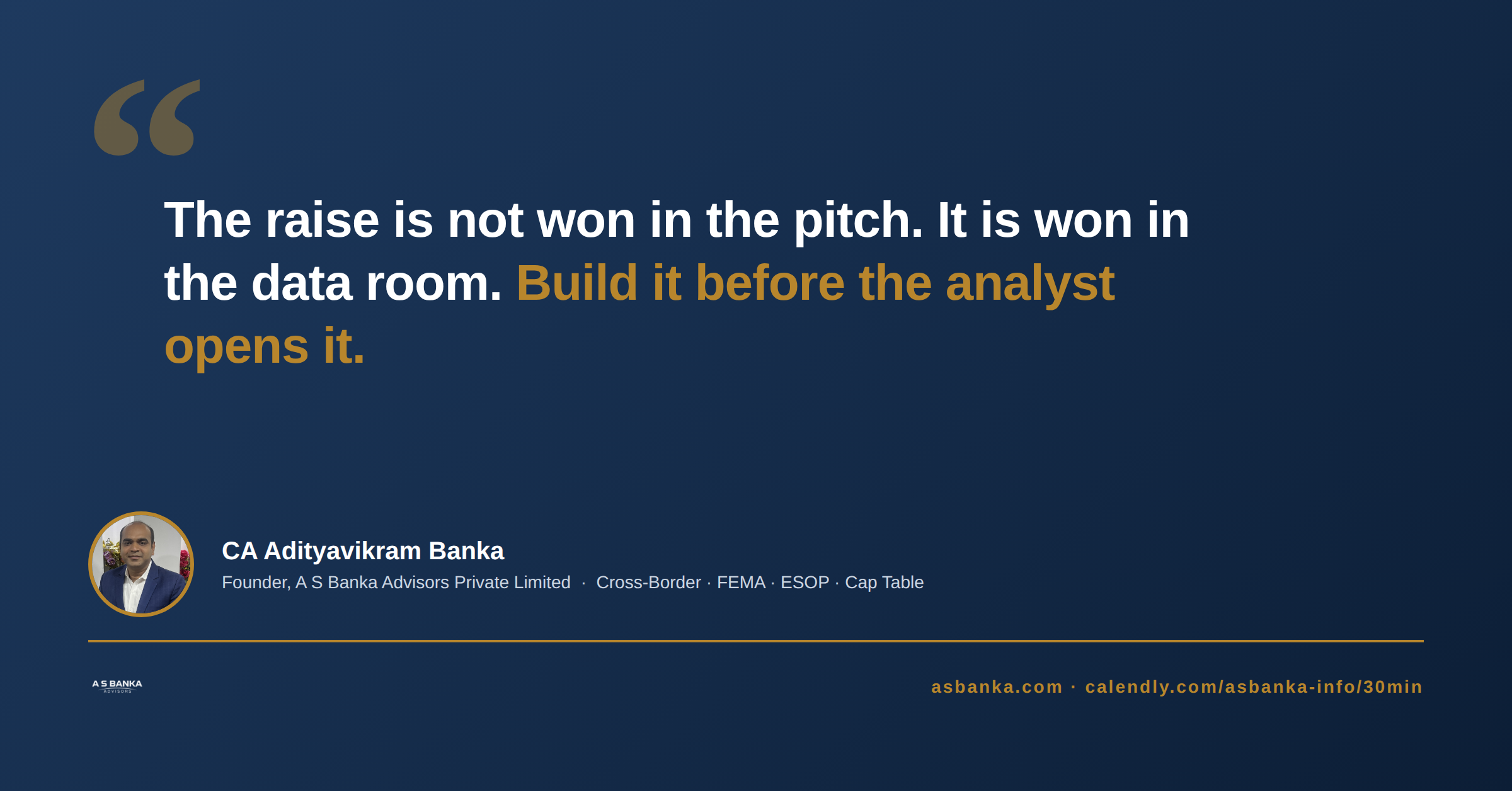
Startup Data Room Checklist: What Indian Investors Actually Ask For (2026)
Every founder thinks the raise starts with the pitch. It…
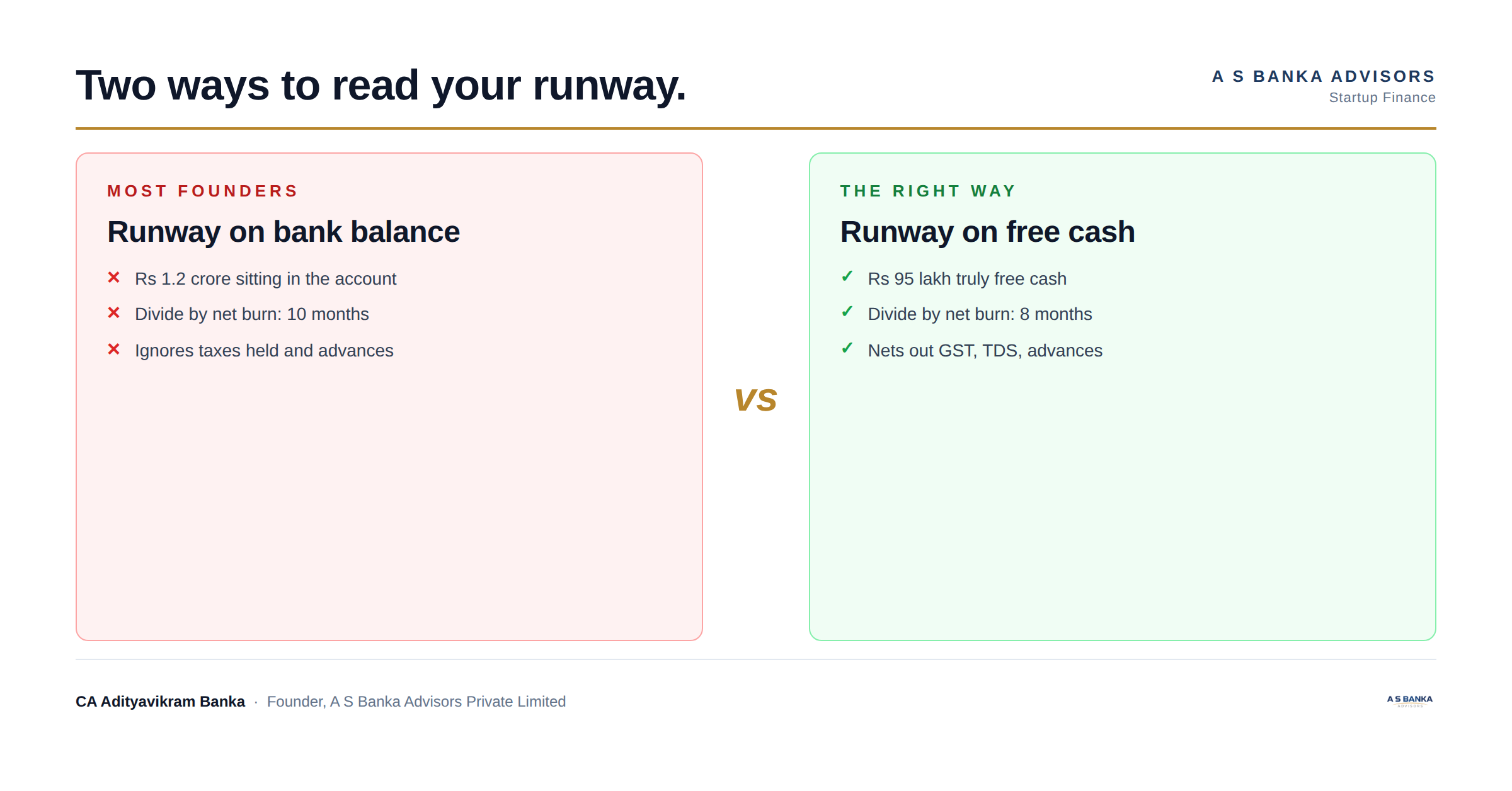
Burn Rate and Runway for Indian Startups: How to Calculate Both (and Why Founders Get It Wrong) in 2026
Key Takeaways Gross burn is the total cash you spend…
ESOP vs Phantom Stock: Which Equity Plan Is Right for Your Startup?
You want to retain your best people. You've heard about…