Key Takeaways
- SEBI notified the AIF Second Amendment Regulations 2026 on April 15, 2026, creating an “Inoperative Fund” classification for AIFs that cannot deploy capital in time.
- Regulation 29 now requires every AIF to file a Placement Memorandum (PPM) Addendum whenever a material change occurs in fund strategy, manager, or extension of tenure.
- For startups raising from AIFs, the change tightens investor commitments and may slow down new fund deployment through July 2026 as GPs adjust.
- Founders should expect more document requests during DD, stricter side letter scrutiny, and renewed focus on sector concentration caps.
- This is a GP-side regulation, but the downstream effect hits startup fundraising timelines, especially for companies in active Term Sheet negotiation with Cat I and Cat II AIFs.
On April 15, 2026, SEBI notified the AIF (Second Amendment) Regulations 2026. Most coverage focused on what it means for Alternative Investment Fund managers. Very little has been written on what it means for the startup founders those funds invest in.
This guide bridges that gap. If you are raising from or already backed by an AIF, here is what the amendment changes, what it does not change, and what you should prepare for in the next 6 to 9 months.
What the Amendment Actually Does
The amendment introduces three structural changes to the AIF Regulations 2012:
1. “Inoperative Fund” Classification (New)
Under the new Regulation 2(1)(da), an AIF that fails to deploy at least 25 percent of its commitments within the Commitment Period or within 3 years from First Close (whichever is earlier) can be classified as “Inoperative” by SEBI.
Once classified Inoperative, the fund:
- Cannot accept new commitments
- Must wind down or seek SEBI approval for an extension with a revised PPM
- Must disclose the Inoperative status to all LPs within 30 days
2. Mandatory PPM Addendum Under Regulation 29
Regulation 29 previously required AIFs to circulate a Placement Memorandum (PPM) to prospective investors. The amendment now requires a PPM Addendum for any material change after the PPM is filed, including:
- Change in fund manager or key personnel
- Change in investment strategy or sector allocation by more than 10 percent
- Extension of fund tenure beyond the original term
- Material change in fund documentation or side letters
The PPM Addendum must be filed with SEBI and circulated to all existing LPs within 30 days of the change.
3. Tightened ECS (Early Close Scenario) Compliance
AIFs operating on an Early Close Scenario now have stricter documentation obligations. Any commitment accepted during an ECS must be disclosed with a detailed variance report against the original fund thesis.
Why This Matters for Founders
You may read this and think: “This is a GP problem, not a startup problem.” That is only partly true.
Here is how the amendment flows through to your fundraise:
1. AIF Deployment Pressure Will Tighten
Fund managers now have a hard statutory deadline to deploy 25 percent of commitments. Funds raised in 2024 with a 3-year commitment period will feel immediate pressure through the back half of 2026.
What this means for you: Cat I and Cat II AIFs with 2024 vintages may rush deal closures to avoid Inoperative classification. Expect compressed DD timelines, fewer extension requests, and more “take it or leave it” terms from GPs racing the 3-year clock.
2. More Rigorous DD at Pre-Investment Stage
To file a clean PPM Addendum when they invest in you, GPs need airtight DD records. Any compliance gap in your company could force the GP to flag a deviation in their next regulatory filing.
What this means for you: Your investor-facing documents matter more than before. Three areas that will face heightened scrutiny:
- Cap table reconciliation with MCA records
- ESOP scheme compliance and PAS-3 filings
- Related party transactions and transfer pricing documentation
3. Side Letter Discipline Returns
Pre-amendment, founders often negotiated aggressive side letters without realising they created PPM divergence for the GP. The new PPM Addendum rule means every material side letter must be disclosed.
What this means for you: Less flexibility on bespoke MFN clauses, information rights, and board observer rights. GPs will push for standardised LP and founder terms.
Sector Impact: Who Feels This Most
| Stage | Impact | Why |
|---|---|---|
| Pre-Seed and Seed | Low | Typically Angel + micro-VC, not Cat II AIFs |
| Series A | High | Cat II AIFs dominate; 2024-vintage funds are deploying now |
| Series B+ | High | Cat I/II AIFs and Special Situations AIFs under new ECS rules |
| Growth / Pre-IPO | Moderate | Cat III AIFs less affected; more private equity crossover |
Three Actions Founders Should Take Before July 2026
Action 1: Run a Pre-DD Compliance Audit
Even if you are not in an active fundraise, pull these three records and cross-check them:
- Your Annual Return filed with MCA (versus your internal cap table)
- Every Form PAS-3 filed for past share allotments
- Every board resolution for the last 24 months
If any of these do not reconcile, fix it now. Not during DD.
Action 2: Create a Transfer Pricing Baseline (If You Have Any Foreign Entity)
If you have a US, Singapore, UAE, or any other overseas entity, you need documented transfer pricing for every intercompany transaction. Not a full study yet, but at minimum:
- A functional analysis (who does what)
- An arm’s length benchmarking rationale
- Documentation of the transaction terms (invoices, agreements)
If your revenue flows through multiple entities, this is no longer optional.
Action 3: Map Your LP Mix Before the Next Raise
Ask your term sheet partner: What is your fund vintage? What percentage of commitments have you deployed? Do you anticipate a PPM Addendum during my investment?
The answers will tell you:
- Whether the GP has runway flexibility or deployment pressure
- Whether you can negotiate timeline or are expected to close fast
- Whether your deal could become a disclosure event for the GP
What the Amendment Does NOT Change
A few common misreadings worth clarifying:
- It does not change AIF taxation. Cat I and Cat II pass-through treatment continues under Section 10(23FBA) of the Income Tax Act 2025.
- It does not change the Angel Tax position. Section 56(2)(viib) was abolished by Finance Act 2024 for shares issued on or after April 1, 2024.
- It does not change Category III AIF regulation. The ECS and Inoperative classification apply mainly to Cat I and Cat II.
- It does not change minimum LP commitment size. Rs 1 Cr minimum for Cat I and Cat II remains.
Frequently Asked Questions
Q1: Does my existing investor have to file a PPM Addendum just because they invested in me?
Only if their investment in you represents a material change from their stated strategy (usually 10 percent sector deviation or more). Routine investments within the fund thesis do not require an Addendum.
Q2: If my term sheet partner’s AIF gets classified Inoperative, what happens to my round?
Any commitment accepted before the Inoperative classification remains valid. But the fund cannot take new commitments, which could freeze any future tranche structures (Tranche 2, bridge extensions, etc.).
Q3: Will this slow down closures in Q3 and Q4 2026?
Most likely yes, but only temporarily. GPs need 60 to 90 days to update PPM templates, re-paper side letter standards, and adjust DD checklists. Expect friction from May to August 2026, normalisation from September onwards.
Q4: Does this apply to Family Office money or SFB/NBFC debt?
No. The amendment is specific to SEBI-registered AIFs under the AIF Regulations 2012. Direct family office investments, SFB debt, and NBFC structured credit are unaffected.
Q5: Should I delay my fundraise until the dust settles?
Not if your runway is less than 12 months. The friction is procedural, not directional. GPs still have capital to deploy and deadlines to meet. The amendment may even help serious founders: cleaner companies close faster because the GP faces less regulatory risk on the investment.
Compliance Checklist for Founders Raising From AIFs
- Cap table reconciled with MCA Annual Return
- Every PAS-3 filing up to date for share allotments
- Every board resolution for the last 24 months documented
- ESOP scheme compliant with Section 62(1)(b) and Rule 12
- Related party transactions documented with arm’s length justification
- Transfer pricing baseline for any international transaction
- Form FC-GPR filed for any past foreign share issuance
- Statutory auditor up to date on all revenue recognition policies
- Shareholder agreement and Articles of Association up to date with current round structure
- Founders’ loans and advances formalised with written agreements and resolutions
Related Reading on asbanka.com
- ESOP Taxation in India 2026: Complete Guide for Startup Founders
- The Startup Cap Table Guide: From Founding to Series A
- Startup India Fund of Funds 2.0: What the Rs 10,000 Cr DPIIT Notification Means for Your Fundraise
What to Do Next
The SEBI AIF Second Amendment 2026 is a GP-side regulation with downstream consequences for founders. The companies that adapt fastest, by running a pre-DD audit, cleaning up related party and cross-border exposures, and understanding their LP mix, will close rounds faster through the back half of 2026 than those who treat compliance as a DD-stage problem.
If you are planning a raise in the next 9 months, run the 10-point checklist above. If any item is a blocker, fix it now.
Get your free DD Readiness Score to benchmark your investor readiness in 10 minutes.
Or book a quick strategy session with A S Banka Advisors Private Limited to map your fundraise timeline against the new AIF framework.
Disclaimer: This article is for educational purposes and does not constitute legal or tax advice. Regulatory positions may change following further SEBI circulars. Consult a qualified professional for advice specific to your situation.
Related Posts

Understanding Business Model Canvas (BMC)
Understanding Business Model Canvas (BMC) The Business Model Canvas (BMC)…

The Cap Table Hygiene Checklist: Is Your Startup Due Diligence Ready?
Before your next investor meeting, run through this checklist. Most…
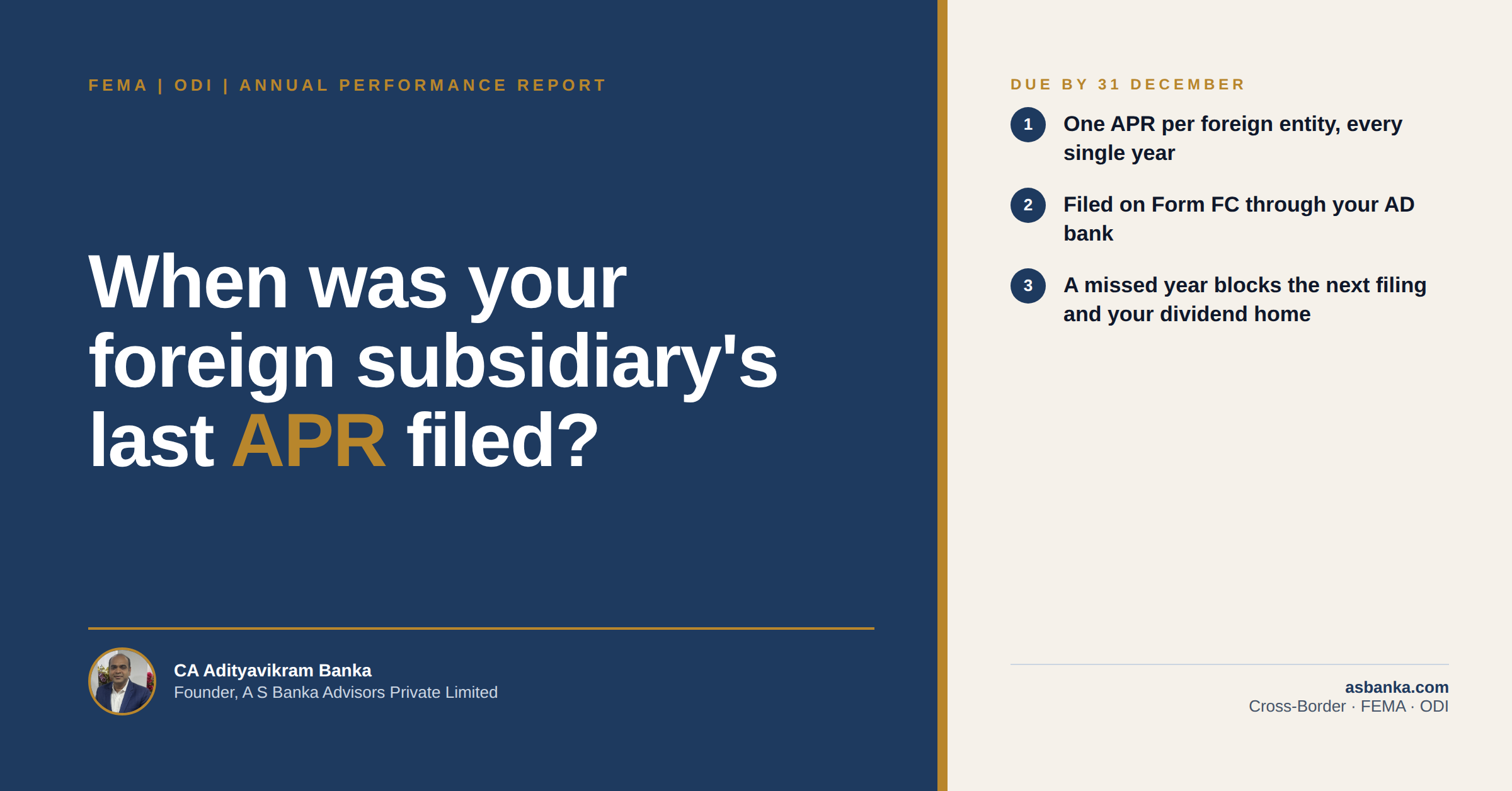
Annual Performance Report (Form APR) for Your Foreign Subsidiary: What Indian Founders Must File by 31 December
Key Takeaways If you are resident in India and hold…