FY 2026-27 started with a quiet revolution in GST compliance. Ten changes took effect on April 1, 2026, and if your startup has not adjusted yet, the consequences range from blocked filings to lost ITC for your buyers. Here is what you need to know and what to do about it.
E-Invoicing Just Got Bigger
The e-invoicing threshold dropped to Rs 5 crore aggregate annual turnover. If your startup crossed this mark in any year since FY 2017-18, you are now covered. Every B2B invoice must carry a valid IRN from the Invoice Registration Portal before dispatch. Separately, businesses with Rs 10 crore+ turnover face a 30-day reporting deadline: invoices reported late get rejected by the portal, and your buyer loses the ITC claim. This is not just your compliance problem; it is now your customer’s problem too.
The Invoice Management System Changes Everything
IMS is now live on the GST portal. Recipients must actively accept, reject, or keep invoices pending. This data feeds directly into GSTR-2B, and rejected credit notes create additional GSTR-3B liability for the supplier. If you are not reviewing your IMS dashboard at least weekly, you are exposing yourself to unexpected tax liabilities.
GSTR-3B Hard Validations and the 3-Year Time Bar
This is arguably the most consequential change. GSTR-3B filing now has hard validations: if your GSTR-1 and GSTR-3B numbers do not match, the portal blocks your filing entirely. No more advisory warnings. And here is the critical part: there is now a statutory 3-year time bar in the CGST Act. GSTR-3B returns from FY 2022-23 and earlier become permanently unfiled if you do not act immediately. The window is closing.
Exporters: File Your LUT Before Your First Invoice
Your FY 2025-26 LUT (Form RFD-11) expired on March 31. If you have not filed a fresh one for FY 2026-27, every export invoice you generate will attract IGST, creating immediate cash flow complications. The good news? The Rs 1,000 minimum refund threshold under Section 54 has been removed, so smaller exporters can now claim refunds that were previously blocked.
HSNS Cess, Track and Trace, and Other Changes
The GST Compensation Cess has been replaced by the HSNS Cess under the Health Security National Security Cess Act, 2025, affecting tobacco, pan masala, and aerated beverage businesses. A track-and-trace mechanism under Section 148A with penalties up to Rs 1 lakh or 10% of tax (Section 122B) is now active. GST registration withdrawal has been simplified via Form REG-32, requiring just one tax period of returns instead of three months.
Your Action Plan
- File Form RFD-11 (LUT) before your next export invoice
- File any pending GSTR-3B from FY 2022-23 immediately
- Verify your billing software has rolled over to the new FY 2026-27 document series
- Set up e-invoicing if your AATO exceeds Rs 5 crore
- Start reviewing IMS weekly before each GSTR-3B filing
- Reconcile GSTR-1 vs GSTR-3B before filing (hard validations block mismatches)
Download the full compliance checklist carousel (PDF)
Need Help Navigating These Changes?
GST compliance is getting more complex every quarter. If your startup needs clarity on e-invoicing setup, GSTR-3B reconciliation, or export compliance, talk to an expert. Book a quick call with A S Banka Advisors Private Limited to get your FY 2026-27 compliance in order.
Related Posts
Due Diligence Data Room for Startup
Due Diligence Data Room for Startup. How to Prepare for…
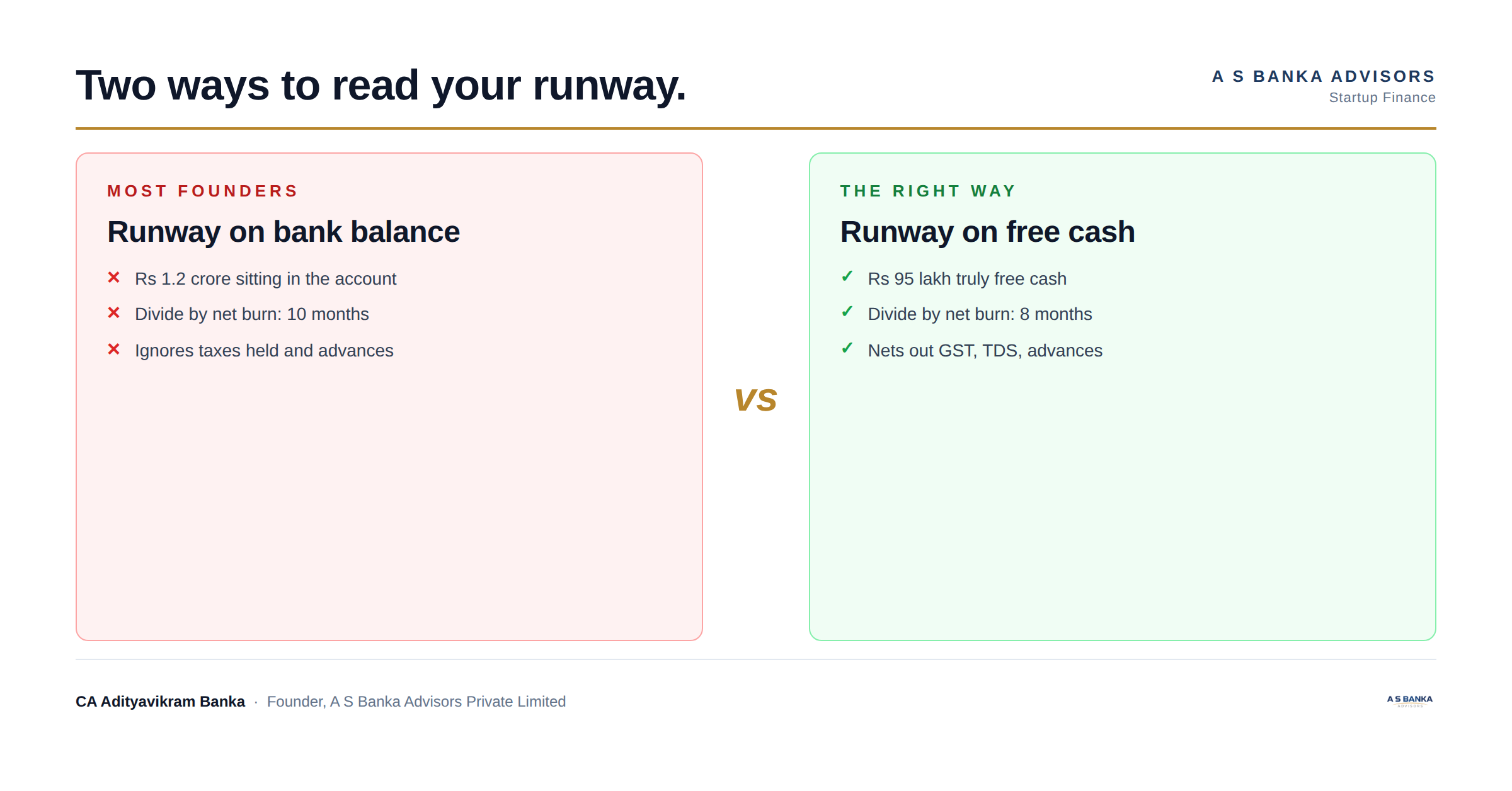
Burn Rate and Runway for Indian Startups: How to Calculate Both (and Why Founders Get It Wrong) in 2026
Key Takeaways Gross burn is the total cash you spend…