The Calcutta High Court has handed startup founders, manufacturing CFOs, and their advisors a meaningful win that very few will notice in the news cycle. On April 21, 2026, in M/s Graphite India Ltd vs Commissioner of Income Tax IV, a Division Bench of Justices Rajarshi Bharadwaj and Uday Kumar reopened two questions that quietly affect the cash position of every manufacturer with a captive power plant or a State industrial subsidy on its books.
If your startup runs a manufacturing operation, has installed captive renewable or thermal power, or has received a State investment subsidy at any point in the last decade, this ruling deserves an hour of your finance team’s attention this week. Here is what changed and what to do about it.
What the Court Decided
Three issues. Three reversals of the ITAT order. Each one has financial consequences for industries beyond Graphite India.
- Section 80-IA captive power transfer pricing. The market-value benchmark for internally consumed power is the full State Electricity Board tariff to comparable consumers, including the electricity duty component. The ITAT had stripped duty out of the calculation. The High Court restored it, citing the Supreme Court ruling in CIT vs Jindal Steel and Power Ltd as binding authority.
- Sales tax remission as capital receipt. A subsidy received under the West Bengal Incentive Scheme, 1993 was held to be capital in nature, not revenue. It does not enter book profit under Section 115JB (now Section 206 of the Income-tax Act 2025). The Court applied the purpose test from Ponni Sugars: character of a subsidy is fixed by the State’s purpose in granting it, not by the mechanism (percentage of sales tax) used to compute it.
- Section 80HHC and Section 80-IA stack independently when the underlying business activities (export of products and captive power generation) are genuinely distinct sources. The ITAT was wrong to mechanically reduce 80HHC by 80-IA.
Why Captive Power Computations Matter for Your Startup
If your startup has a manufacturing footprint and has installed solar, wind, or thermal capacity to feed its own operations, the Section 80-IA deduction (or its successor under the Income-tax Act 2025) is a meaningful tax shield. The deduction is computed on the profits attributable to the captive power undertaking, valued at the market price of power in your State.
Most assessments and most tax computations strip out the electricity duty component when notionalising that market price. After Graphite India, that approach undervalues the deduction. The full State Board consumer tariff (often 40 to 60 percent higher once duty is added back) is the right benchmark. For a manufacturer with a 10 MW captive plant, the difference can be material across a 10 year window.
Why State Subsidy Treatment Matters Even Today
Many founders assume that pre-GST industrial incentive schemes are now historical. That assumption is wrong in two ways. First, the same purpose-test characterisation is being applied to the GST-linked reimbursement schemes that replaced the older incentives in 2017. If your startup migrated from a sales tax remission to a GST-linked refund under a State industrial policy, the original capital character of the grant carries through. Second, reassessment windows for AY 2019-20 onwards remain open under Section 148 and 149, and Section 154 rectification is available for completed orders within four years where book profit was wrongly inflated.
What to Do This Week
- Pull every captive power computation filed since FY 2018-19 and verify whether electricity duty was part of the tariff benchmark. If it was excluded, you have a refund or rectification claim to evaluate.
- List every State subsidy received by the company (sales tax remission, electricity duty waiver, VAT refund, GST-linked reimbursement) and obtain the original scheme document. The State’s stated purpose in granting the subsidy is the determining factor.
- Compute the MAT impact. If subsidies were added to book profit under Section 115JB or 206, model the rectified profit and the corresponding refund.
- Watch for SLP. The tax department may file a Special Leave Petition before the Supreme Court. The position is favourable for now but track the SLP docket before booking refunds in the financials.
- Add Graphite India to live submissions. Any pending appeal or reassessment dealing with these issues should now cite this ruling.
The Bigger Strategic Point
For founders, this ruling is a useful reminder that tax positions taken in the early years of a company often stay live for far longer than founders expect. Reassessment windows extend up to ten years in escape-of-income cases, and rectification is available for four. A position taken when revenue was Rs 5 crore may produce a refund worth Rs 50 lakh five years later. Audits of historical positions are not a finance team’s most exciting task, but they often uncover the cleanest cash you will find.
Download the Full Carousel
We have prepared a 9-slide breakdown of the Calcutta High Court ruling, the purpose test, and the action plan for CAs and CFOs. Download the full carousel PDF.
Need Help Auditing Your Position?
Captive power transfer pricing and subsidy characterisation are recurring litigation areas. If your startup or manufacturing client has historical positions worth reviewing, talk to an expert at A S Banka Advisors Private Limited. Book a quick call: https://calendly.com/asbanka-info/30min.
Related Posts
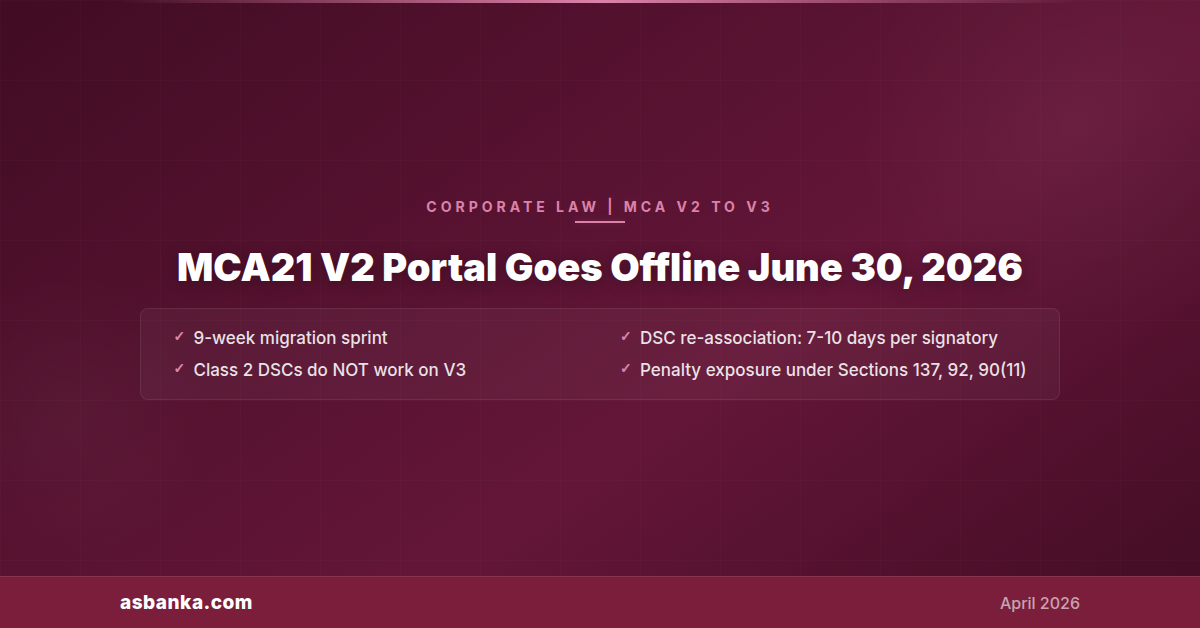
MCA21 V2 Portal Goes Offline June 30 2026: A 9-Week Migration Sprint for Indian Founders and Their Professionals
Most CA practices we have spoken to in the last…
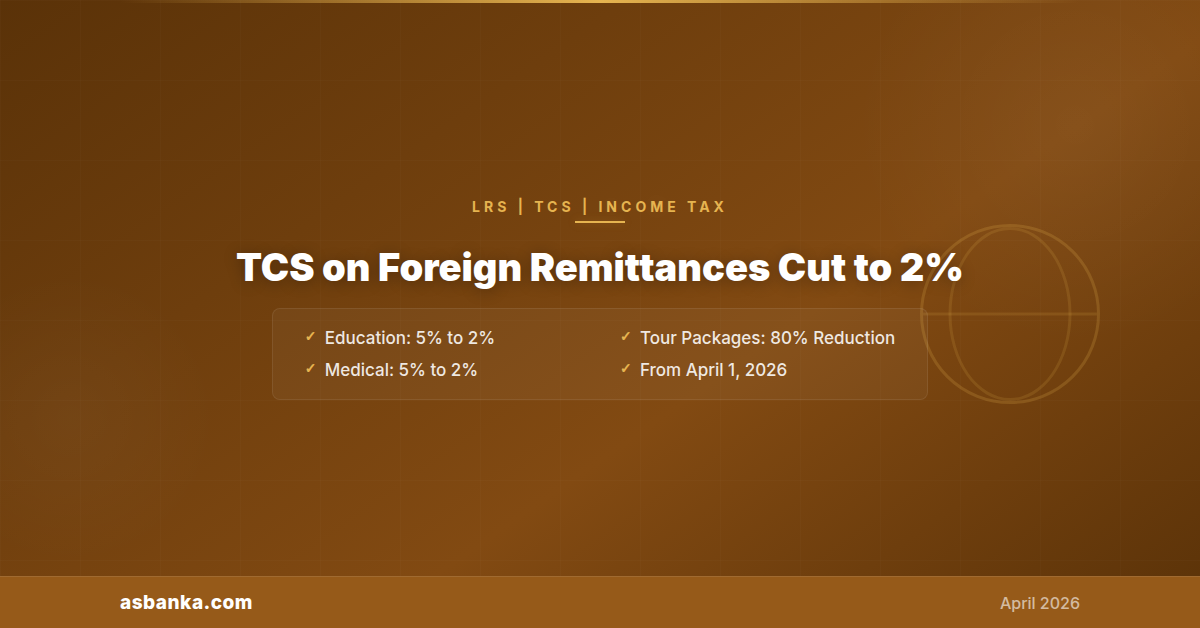
TCS on Foreign Remittances Cut to 2%: What Indian Startups Sending Money Abroad Need to Know
Your Foreign Remittance TCS Just Got a Lot Cheaper If…
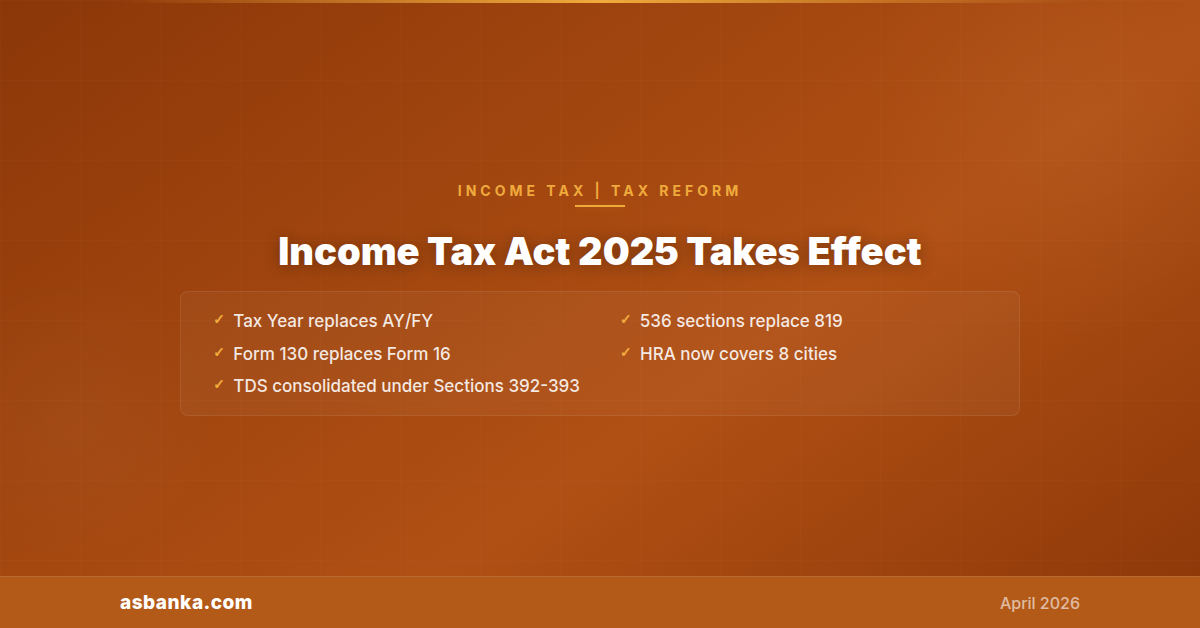
Income Tax Act 2025: What the Biggest Tax Reform in 64 Years Means for Your Startup
April 1, 2026: A New Era in Indian Tax Law…