
The Central Board of Direct Taxes (CBDT) has notified the Income Tax Rules 2026 via Notification No. G.S.R. 198(E), dated March 20, 2026, under Section 533 of the Income-tax Act, 2025. These rules take effect from April 1, 2026, and bring 10 significant changes that will impact every employee, employer, and tax professional in India.
Here is what these changes mean for your business and your people.
1. HRA Exemption Now Covers 8 Metro Cities
Four new cities, Bengaluru, Pune, Ahmedabad, and Hyderabad, now qualify for the 50% HRA exemption, joining Delhi, Mumbai, Kolkata, and Chennai. If your employees in these cities are on the old tax regime, their HRA tax savings just went up. This is a meaningful change for companies with distributed teams across these metros.
2. Car Perquisite Values Jump 178-233%
The monthly taxable value of employer-provided cars has been revised sharply upward. A car with engine capacity up to 1.6 litres goes from Rs 1,800 to Rs 5,000/month when the employer covers running costs. Cars above 1.6 litres jump from Rs 2,400 to Rs 7,000/month. Chauffeur value rises from Rs 900 to Rs 3,000/month. Electric vehicles get the concessional rate at par with sub-1.6L vehicles, which is a welcome incentive.
For employers: this increases the taxable salary component unless you restructure your CTC breakdowns before April 1.
3. Education, Hostel, Gift, and Meal Exemptions Get a Major Boost
Children education allowance moves from Rs 100 to Rs 3,000/month per child (max 2 children). Hostel expenditure goes from Rs 300 to Rs 9,000/month per child. This means a family with two children in hostels can claim up to Rs 2.88 lakh per year tax-free. Festival gift exemption rises from Rs 5,000 to Rs 15,000. Free meal exemption goes from Rs 50 to Rs 200 per meal. These are the first meaningful revisions to these limits in decades.
4. PAN Quoting and SFT Reporting Simplified
Motor vehicle purchases now require PAN only above Rs 5 lakh (previously all vehicles). Cash deposit/withdrawal PAN threshold moves to Rs 10 lakh aggregate per financial year. Immovable property PAN threshold doubles to Rs 20 lakh. On the reporting side, mutual fund SFT reporting has been removed entirely, while insurance premium reporting now applies above Rs 5 lakh (with PAN) or Rs 2.5 lakh (without PAN).
5. ITR Forms Consolidated, Deadlines Extended
The number of ITR forms drops from 399 to just 190. The terminology changes too: “Previous Year” and “Assessment Year” are replaced by “Tax Year.” More importantly, the filing deadline for ITR-3 and ITR-4 has been extended to August 31 (from July 31), giving business and professional income earners an extra month.
What Should You Do Before April 1?
If you are an employer or HR lead: update payroll systems for revised perquisite values and new HRA metro list. If you are a CA or tax advisor: revise all client advisory letters for Tax Year 2026-27. If you are a salaried employee: check your HRA claims and education allowance with your employer.
Download the full carousel PDF for a visual summary of all 10 changes.
Need help restructuring your CTC or updating your compliance systems? Talk to an expert at A S Banka Advisors Private Limited.
Related Posts
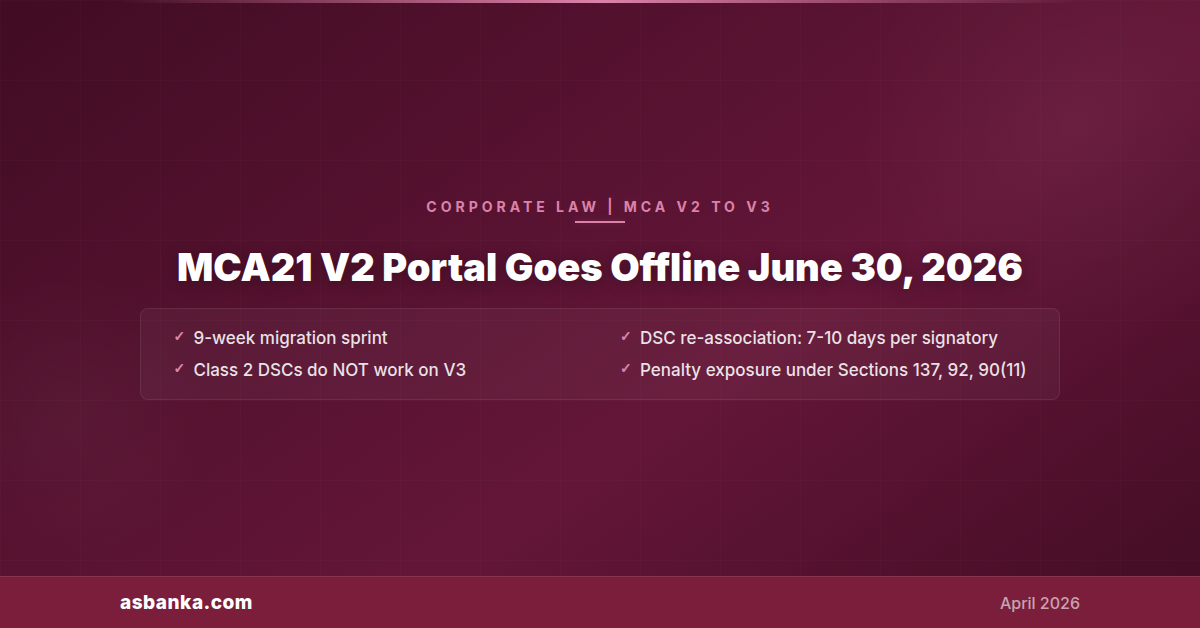
MCA21 V2 Portal Goes Offline June 30 2026: A 9-Week Migration Sprint for Indian Founders and Their Professionals
Most CA practices we have spoken to in the last…
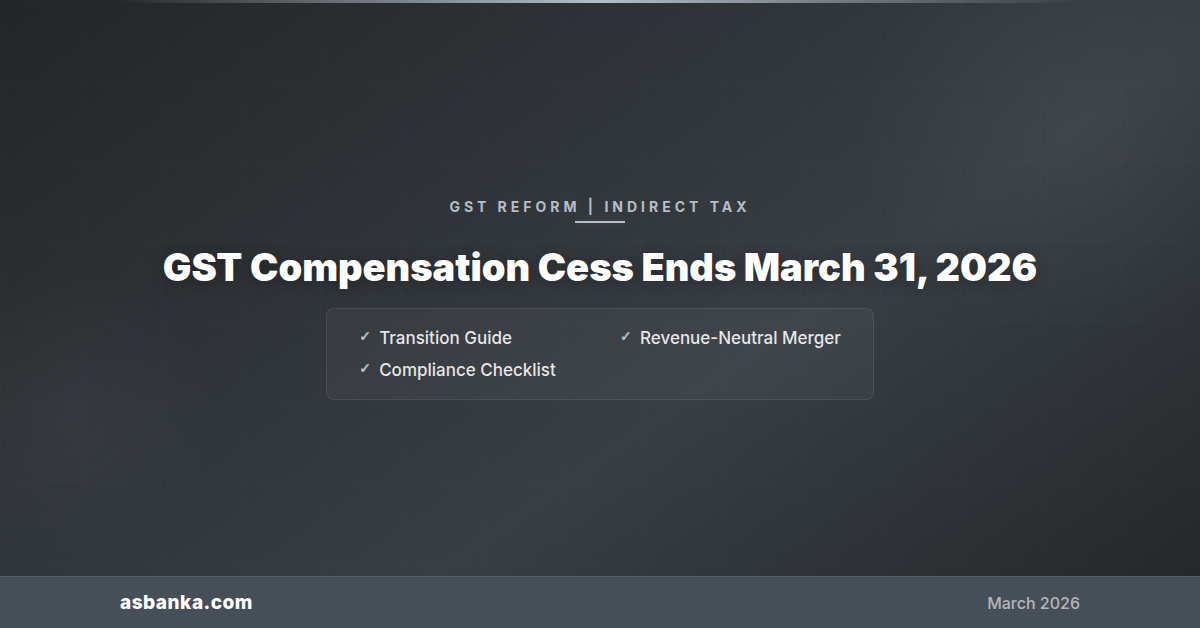
GST Compensation Cess Ends March 31: What the Transition Means for Your Business
The Nine-Year Cess Is Ending. Is Your Business Ready? On…
3 distinct areas where founders are focusing in 2026
3 distinct areas where founders are focusing in 2026 :…